The short answer
A trustworthy real estate developer has a verifiable track record of completed and delivered projects, is transparent about property documents and building permits, and can show concrete figures — not just promises — about its previous activity.
01 · Checklist
What to check before buying from a developer
The company’s age and track record
A group active for several decades, with documented projects, has been through several economic cycles and has proven its stability. A history of decades and hundreds of completed projects is much easier to verify than the promises of a newly founded company.
Previous projects fully completed
Check whether the developer has at least one major project carried through to the end — delivered and 100% sold — not just projects at various unfinished stages.
Presence in several markets
A group that operates in several countries, for example in Europe and America, has shown it can replicate a successful model in different contexts.
Property documents for the land
Ask for the land registry number and check it with ANCPI/OCPI (the national land registry authorities), to confirm that the land is free of encumbrances.
The building permit
It must exist and be valid for the phase in which you are buying.
The guarantees offered
A clear construction warranty for finishes and major structures is a sign of seriousness.
The project’s technical certifications
A recognized energy efficiency certification, such as nZEB, is verifiable and hard to fake through marketing alone.
Transparency about plans and areas
The plans must clearly indicate the usable area and the built area, without ambiguity.
02 · The track record
What a verifiable track record means, in practice
A developer who can show a previous project fully completed — for example, a complex of over 900 apartments, built in six phases and 100% sold — offers a practical guarantee stronger than any marketing promise.
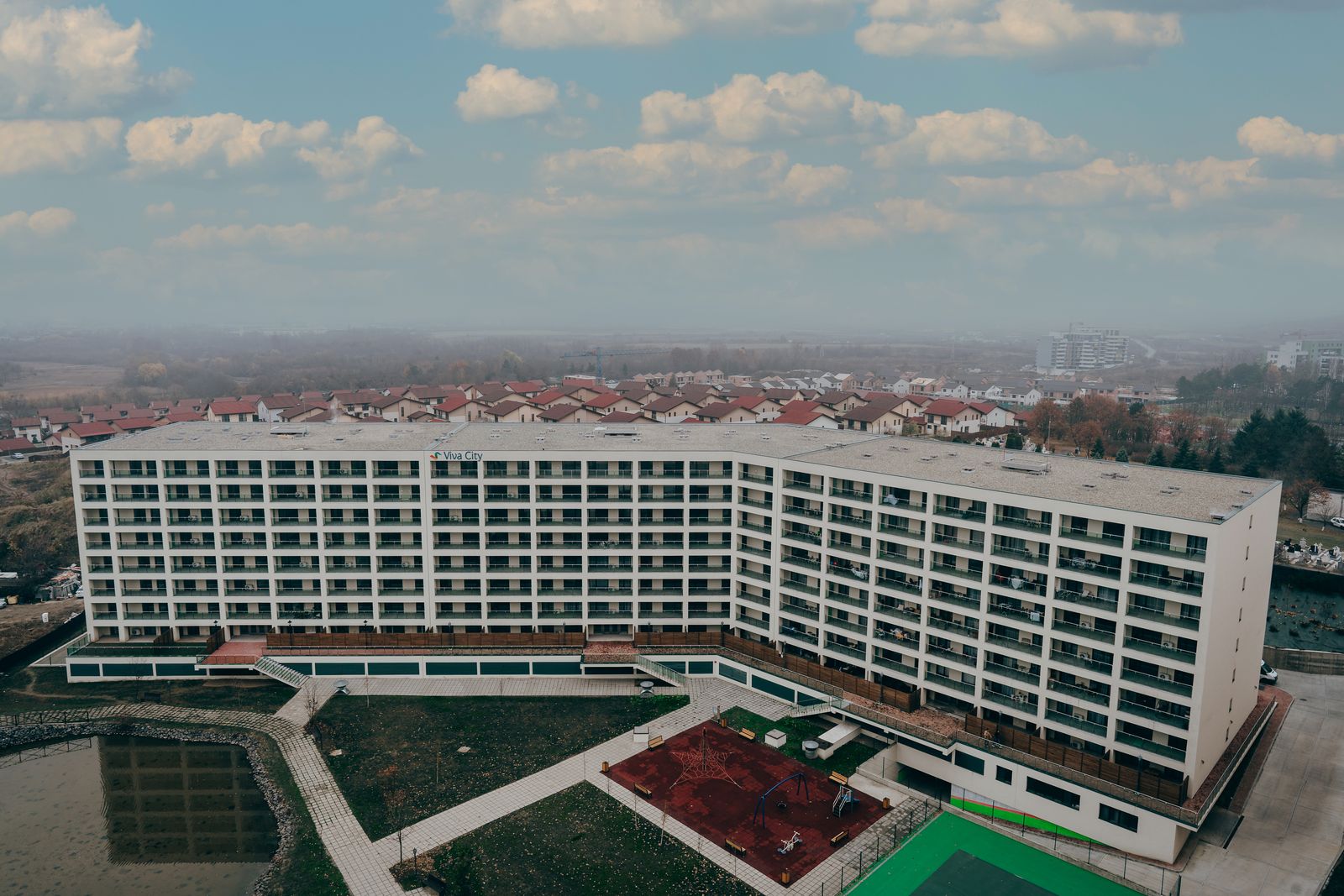
It is proof that the developer knows how to take a project from bare land to a working community, meeting the agreed deadlines.
03 · The VIVACITY example
Grupo Herce, the developer behind VIVACITY
1980
the year since which the group has been active
245
completed projects
6.157+
apartments delivered
900+
apartments at VIVACITY Residence Gheorgheni, 100% sold
VIVACITY is part of Grupo Herce, with activity in Romania, Spain, the USA and Chile. In Romania, the commitment began in 2008, in Cluj-Napoca, with VIVACITY Residence Gheorgheni, a fully completed and 100% sold project. Details in the Grupo Herce presentation brochure.
04 · In short
Frequently asked questions
What do I do if the developer refuses to show the land documents?
It is a warning sign. Property documents and the building permit are information that any legitimate developer can provide, and a refusal should make you cautious.
Does it matter if the developer is part of an international group?
It can be a real advantage in terms of financial resources and technical experience, especially if the group can show concrete figures: number of projects, square meters built, countries of activity. Always check the completed local projects too, not just the group’s general reputation.


